Quick answer
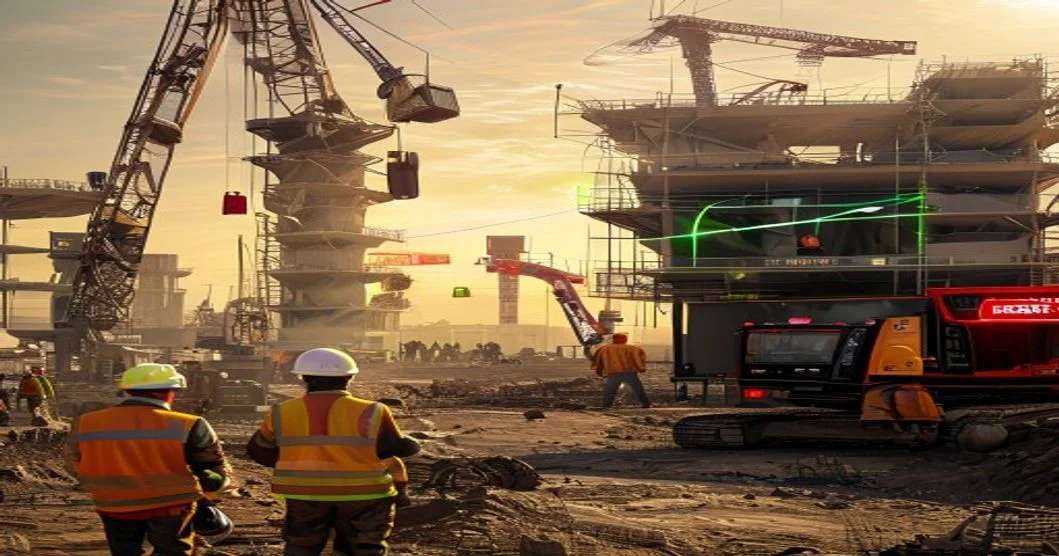
Crane lifting zone safety in Saudi Arabia can be automated by combining PTZ and fixed CCTV cameras around the crane's swing radius with AI video analytics that detect human entry into exclusion zones, missing PPE, and slack rigging in real time. The system pushes alerts to the HSE team's radios and dashboards within 1-3 seconds, which directly addresses the three biggest causes of lifting-related incidents on Saudi giga-projects: heat-fatigued spotters, dust-reduced visibility, and unauthorized workers stepping into the swing radius.
Why crane lifting zones are uniquely dangerous on Saudi sites
A crane's exclusion zone is the space around a load where a dropped object, swinging jib, or snapped sling becomes lethal. Most international standards (ASME B30.5, OSHA 1926.1424) define it as a minimum of 5 m radius under the load, expanding to 10 m or more for tandem lifts and over-slung operations. On a quiet site, that's manageable. On a Saudi giga-project, it's a different story.
Three conditions collide on KSA sites:
- Heat and fatigue. Summer ambient temperatures in Riyadh, Jeddah, and the Eastern Province regularly hit 45-50°C between May and September. NIOSH and Saudi OSH studies consistently link heat stress to slower reaction times and reduced attention span. A human banksman who can comfortably watch a 360° radius for 8 hours in March becomes a liability by 2 p.m. in July.
- Dust and glare. Shamal winds and haboobs cut visibility on the ground to under 100 m for 10-30 minutes at a time. Camera-only CCTV without AI gets blinded by dust plumes and sun glare roughly 4-6% of active lifting hours on desert sites, which is exactly when lifting incidents spike.
- Crowded, multilingual, multi-contractor workfaces. NEOM, Qiddiya, AMAALA, and Roshn sites have 8,000-40,000 workers on a single phase, often split across 20+ subcontractors. Spotters physically cannot know every worker who crosses the cordon.
The result: lifting operations are consistently in the top three causes of fatal incidents on Saudi construction sites, per public Saudi OSH bulletins and IOSH MENA reporting.
What "automating" lifting zone safety actually means
Automation here is not a single product. It's a layered stack:
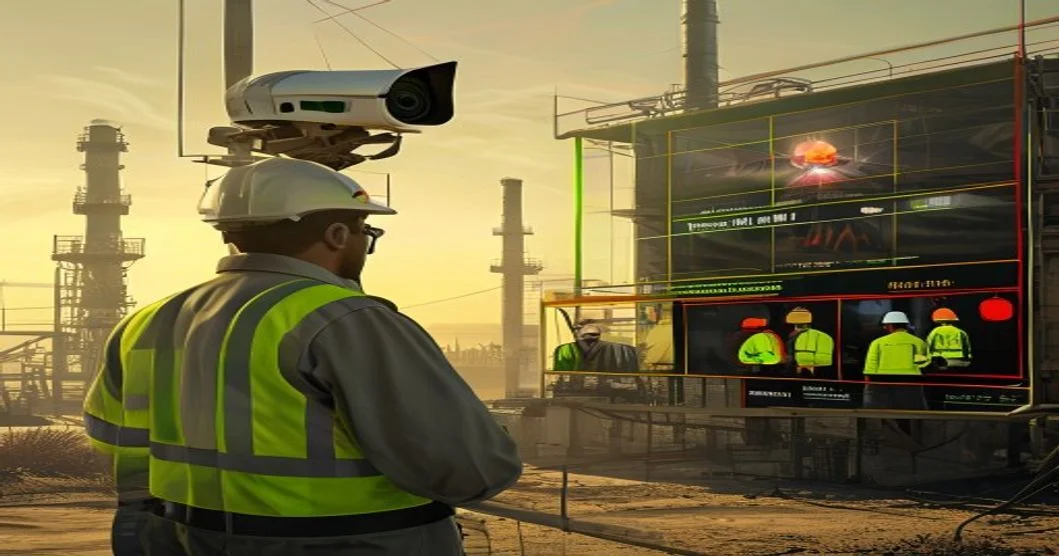
- Detection layer. Fixed and PTZ cameras positioned to cover the full swing radius of the crane, plus optional drone-based aerial sweeps for blind-side lifts.
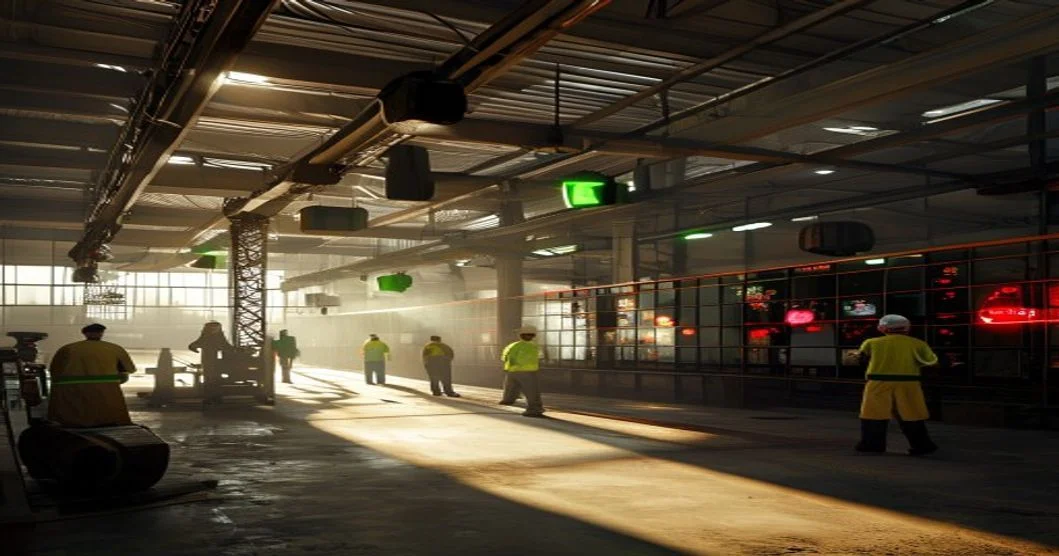
- AI analytics layer. On-edge or cloud models that run three core tasks: person-in-zone detection, PPE compliance (hard hat, hi-vis, safety harness above 1.8 m), and load/ rigging anomaly detection.
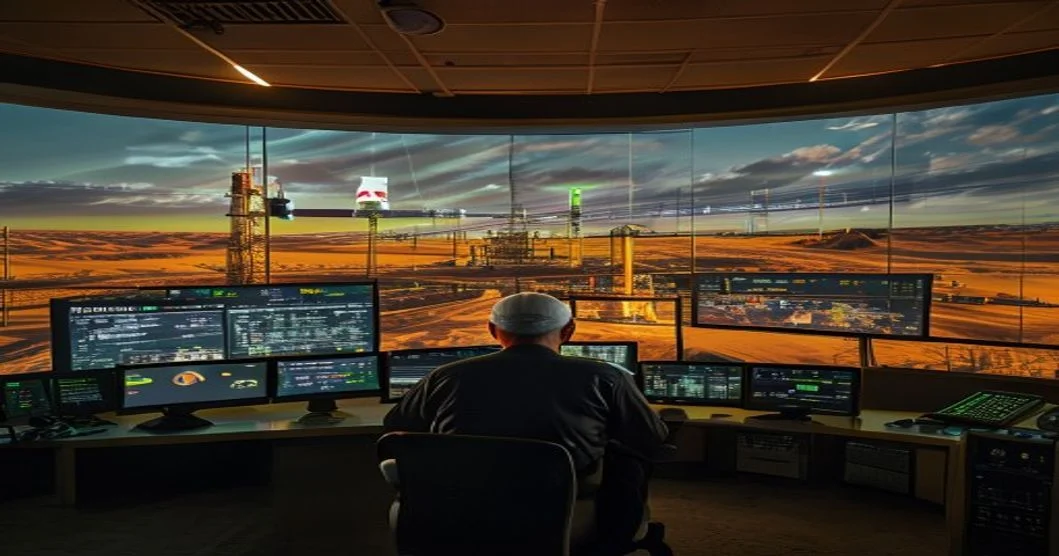
- Alerting layer. Audible sirens, strobes, radio push-to-talk interrupts, and dashboard pop-ups to the HSE control room.
- Compliance layer. Event logs, snapshots, and 30-90 day video retention aligned with PDPL retention rules and client audit requirements.
Done right, you replace the "watch and shout" model with a continuous, audit-grade monitoring loop that doesn't get tired, doesn't lose focus during a 14-hour shift, and doesn't need a coffee break in the second hour of a tandem lift.
How to automate crane lifting zone safety on a Saudi site: a 7-step field guide
The order matters. Most failed deployments I see skip step 3 and pay for it in false alarms.
Step 1: Map the actual exclusion zones, not the textbook ones
Walk the lift plan with the crane operator, lifting supervisor, and HSE lead. For every pick:
- Mark the load radius (the circle the load can fall into if dropped).
- Mark the swing radius (the arc the jib sweeps during rotation).
- Mark the rigging assembly area (where slingers work, often forgotten).
- Note any terrain features that block sightlines — rebar stacks, container offices, dust berms.
Document these per crane per shift. The AI needs the polygon, not a generic 5 m circle.
Step 2: Choose cameras for heat and dust, not just resolution
A 4K camera that overheats at 55°C is useless in July. For outdoor Saudi deployments, specify:
- IP67 or IP68 rating with operating temperature -20°C to +60°C.
- Stabilized PTZ heads with anti-vibration mounts — wind loading at 15-20 m elevation is real.
- IR or thermal-assisted low-light for night pours (which is when most concrete-pour lifts happen to dodge daytime heat).
- Lens cleaners or wiper units on lenses facing the prevailing wind; dust accumulation drops detection accuracy by roughly 20-30% within 4 hours without cleaning.
Typical deployment: 4-6 fixed cameras plus 1 PTZ per crane. On a tight urban site, you can cover two cranes with a single PTZ on a 12 m mast.
Step 3: Tune the AI model on YOUR site, not generic construction footage
This is the step integrators skip to win the tender, and the step that makes or breaks adoption. A model trained on European winter sites will misclassify Saudi PPE because:
- Hi-vis colors lean toward fluorescent yellow-green; international models often expect orange.
- Worker attire — shemagh, full-coverage robes — changes body silhouette detection.
- Lighting is harsher, with stronger shadows and more dust haze.
Plan for a 2-3 week calibration period where the model runs in shadow mode (logs but doesn't alert), during which the integrator tunes PPE classes, exclusion polygon, and ignore zones (e.g., authorised approach routes). A well-tuned system targets:
- ≥ 95% detection accuracy for person-in-zone.
- ≤ 5% false-positive rate during normal operations.
- Alert latency under 2 seconds from event to dashboard.
Step 4: Integrate with the crane's anti-collision and slew brake (optional but powerful)
On tower cranes and high-capacity crawler cranes ( Liebherr, Manitowoc, Terex models common on NEOM and Qiddiya), you can pipe AI alerts into the crane's load moment indicator (LMI) or anti-collision system to:
- Trigger an automatic slew slowdown when a worker enters the swing arc.
- Lock the hoist-down function until the zone clears.
- Log the event into the crane's black box for incident reconstruction.
This is the level that gets you from "warning system" to "active safety control." It's not required for every crane, but it's the right answer for any lift over people-adjacent areas.
Step 5: Wire alerts into the HSE workflow your team already uses
The fastest way to get adoption is to push alerts into existing tools:
- Radio push-to-talk for the banksman and lifting supervisor (Motorola MOTOTRBO or Hytera are standard on Saudi sites).
- SMS/WhatsApp Business for site managers — yes, WhatsApp is still the default field comms tool across most contractors.
- HSE dashboards (SafetyCulture, iAuditor, custom Power BI) for daily KPI rollups.
- Mobile push notifications for the HSE lead's phone, with severity tiers (yellow = warning, red = stop work).
Build the severity matrix with operations, not just HSE. A yellow "person in zone for 3 seconds" should not page the project director at 3 a.m.
Step 6: Lock down PDPL compliance from day one
Saudi Arabia's Personal Data Protection Law (PDPL) and its implementing regulations, fully enforceable since September 2024, treat on-site CCTV footage as personal data. To stay compliant:
- Display signage in Arabic and English at every monitored zone entrance ("This area is under AI video monitoring for safety purposes").
- Restrict access to live and recorded feeds to a named list of HSE and security personnel only.
- Set retention windows of 30-90 days for routine footage, with longer retention only for incident-tagged clips.
- Avoid facial recognition unless you have a documented legal basis; object detection and PPE classification are generally permissible under legitimate interest for safety.
- Run a DPIA (Data Protection Impact Assessment) before go-live and keep it on file for SDAIA audits.
Sites that skip this step have had footage requests from workers' legal representatives and, in a few cases, SDAIA inquiries after complaints. Bake it into the deployment budget.
Step 7: Measure, review, and tighten every quarter
What gets measured gets reduced. Track monthly:
- Number of zone breaches per 1,000 lifts.
- Average time-to-clear after an alert.
- PPE non-compliance rate by subcontractor.
- Heat-stress incidents flagged near lifting zones.
Share the numbers in the weekly HSE committee. The goal isn't surveillance — it's to make breaches visible so behavior shifts. On well-run Saudi programs, the first quarter typically shows a 40-60% drop in repeat zone breaches.
Manual banksman vs AI-monitored lifting zone
| Capability | Manual banksman only | AI video analytics + banksman |
|---|---|---|
| Continuous 360° attention | Fatigue drops after 2-3 hours | 24/7, no degradation |
| Dust/heat resilience | Degraded above 45°C | IP67 hardware, unaffected by heat |
| Detection latency | 1-5 seconds, reaction-dependent | Under 2 seconds, automatic |
| Audit trail | Logbook, subjective | Time-stamped video + snapshots |
| PDPL defensibility | N/A | Built-in with proper config |
| Coverage per shift | 1 zone per banksman | 8-12 zones per camera stack |
| Cost per crane per month (KSA) | ~SAR 6,000-9,000 (1 banksman) | ~SAR 3,500-5,500 (system amortized) |
| Multilingual worker alerting | Limited to shouted warnings | Visual strobes + multi-language audio |
| False positive handling | N/A | Tunable, target ≤ 5% |
The hybrid model — banksman + AI as a redundant safety layer — is what most Saudi contractors land on for the first 6-12 months while the workforce adapts.
Common failure modes to avoid
- Alerting on every person visible. If the AI pages for workers in adjacent non-lifting zones, the HSE team mutes notifications within a week. Tune polygons ruthlessly.
- No escalation path. A "person in zone" alert that no one owns is just noise. Assign a named responder per shift.
- Drone-only coverage. GACA requires a permit for any commercial drone within 5 km of an airport and bans flights over people without waivers. Use drones for periodic sweeps, not live monitoring.
- Ignoring the rigging zone. Most lifting fatalities aren't under the load — they're at the rigging point where slingers work. Map it.
- Buying the cheapest camera. Outdoor Saudi conditions destroy consumer-grade hardware in under 12 months. Industrial-grade pays back in avoided replacements.
Frequently asked questions
What is the legal exclusion zone for crane lifts in Saudi Arabia?
Saudi Arabia doesn't publish a single hard-coded number. Most contractors adopt the international standard: 5 m radius under the load for general lifts, 10 m for tandem or over-slung lifts, and a wider arc during dynamic slewing. The exact zone must be defined in the lift plan and approved by the HSE lead before any pick begins.
Can AI video analytics work in Saudi dust storms and summer heat?
Yes, with the right hardware. Industrial-grade IP67 cameras rated to +60°C with IR or thermal low-light capability handle dust and heat that knock out consumer CCTV. The AI itself is unaffected by weather; only the camera optics matter. Most reputable vendors in KSA specify dust-mitigation features such as lens wipers and hydrophobic coatings.
Is AI monitoring of workers legal under PDPL?
Yes, when deployed for legitimate safety purposes with proper safeguards. PDPL allows workplace video monitoring under legitimate interest, provided workers are notified via signage, footage is access-controlled, retention is limited, and biometric processing (like facial recognition) is avoided unless a specific lawful basis exists. A Data Protection Impact Assessment is strongly recommended before deployment.
How does this integrate with Vision 2030 giga-project safety standards?
Giga-project clients including NEOM, Qiddiya, AMAALA, and Roshn publish HSE standards that often exceed Saudi baseline OSH rules. They typically require CCTV coverage of high-risk activities, automated incident detection, and auditable digital records. AI lifting zone monitoring aligns directly with these requirements and is increasingly specified in tender documents rather than treated as optional.
The bottom line
Crane lifting zone safety on Saudi sites is a high-stakes problem shaped by heat, dust, and the sheer scale of Vision 2030 builds. AI video analytics doesn't replace the banksman — it makes the banksman tireless, the audits airtight, and the HSE lead asleep without losing visibility. The deployments that work are the ones that map real exclusion polygons, tune models on local conditions, integrate with radios and dashboards the team already uses, and lock down PDPL compliance from day one.
ViewKeeper deploys AI video analytics and drone-based monitoring for crane exclusion zones, lifting operations, and HSE compliance across NEOM, Qiddiya, Roshn, and industrial sites in KSA and the wider MENA region. If you want a site walk and a 30-day shadow-mode trial, book a scoping call and we'll bring a heat-rated camera stack, not a sales deck.