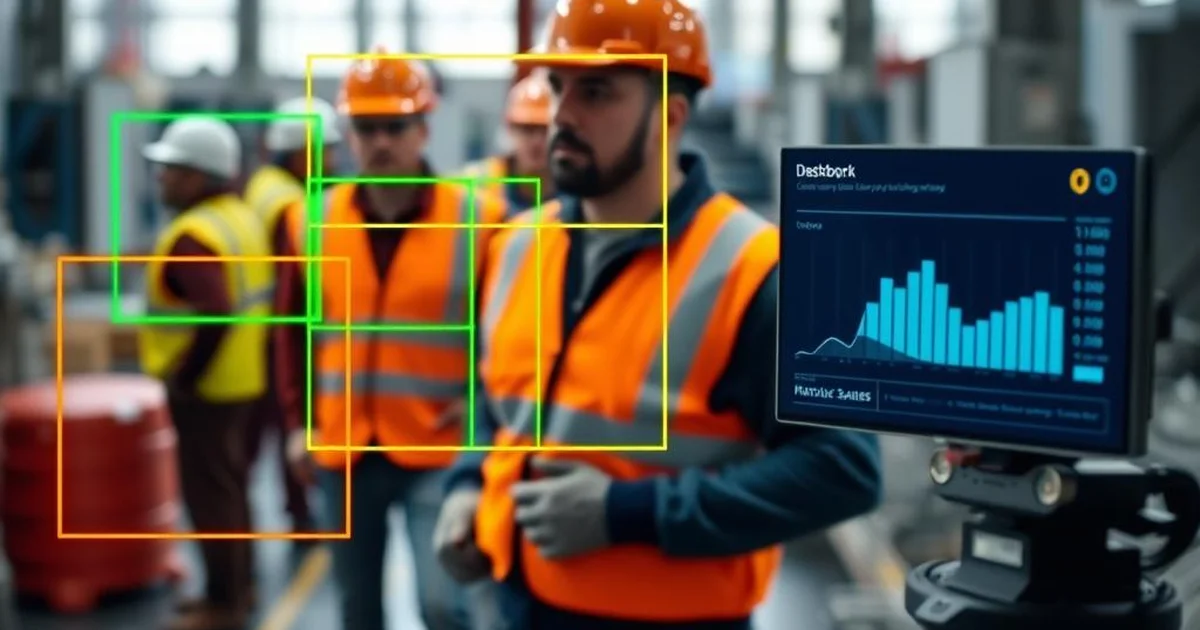
An AI video analytics RFP for Saudi construction sites should be a procurement document that defines camera and edge-AI specs, Saudi-specific compliance (PDPL, GACA, Aramco/royal commission rules where relevant), environmental hardening for 48–52°C heat and shamal-season dust, integration with site HSE and BIM platforms, and measurable SLAs such as ≥92% PPE detection accuracy, <1,000 ms alert latency, and ≥99% monthly uptime. Use the sections below as a copy-paste template, then customize for project size, location, and whether the site sits inside NEOM, Qiddiya, Diriyah, ROSHN, RCJY, or a standard contractor-led development.
Why Saudi construction sites need a tailored AI video analytics RFP
Off-the-shelf global RFP templates miss three things that determine whether the project actually delivers value on a Saudi site: heat and dust environmental ratings, Vision 2030 giga-project reporting requirements, and PDPL-compliant data handling. Sites in Riyadh, Jeddah, and the Eastern Province run at ambient temperatures that regularly exceed 48–52°C in summer afternoons, with dust loads that clog unfiltered optics inside weeks if the enclosure rating is wrong. PDPL (the Personal Data Protection Law, enforced through SDAIA since 2023) treats CCTV footage of identifiable workers as personal data and allows fines up to SAR 5 million per violation, plus data deletion orders and public naming.
A generic RFP will let vendors bid on hardware that fails in week one, or analytics that violate PDPL on day one. A Saudi-specific RFP closes those gaps before contract signature, not after a safety incident.
How to structure the AI video analytics RFP: 8 sections
Use these eight sections in order. They map directly to how Saudi clients (NEOM, RCJY, Aramco, ROSHN, Diriyah Company, Qiddiya, Red Sea Global) structure their tender packs and how their QS teams score bids.
1. Project background and scope
Include:
- Site name, location (city plus industrial city if applicable)
- Phase, contract duration, peak workforce size
- Number of access gates, tower cranes, laydown yards, batching plants
- Whether the site sits inside a giga-project zone with owner-specific reporting (for example, NEOM's compliance portal or Qiddiya's monthly HSE cadence)
- Existing VMS or CCTV infrastructure (Genetec, Milestone, Avigilon, Hikvision, Dahua) and what must integrate versus replace
A line item that gets overlooked: ask bidders to confirm whether the deployment is for a single site or a multi-site master agreement. The pricing, SLA structure, and PDPL data-residency model both change significantly between the two.
2. Functional and use-case requirements
List the actual jobs the AI has to do, not the technology. Common ones on Saudi construction sites:
- PPE compliance (hard hat, hi-vis, safety harness, boots) at gates and work fronts
- Fall-from-height detection near slab edges, scaffolding, and rebar cages
- Confined-space entry control and verification of gas-test records
- Vehicle and pedestrian segregation on haul roads and around tower cranes
- Hot-work permit verification (welding sparks near flammables)
- Night-shift fatigue proxies (loitering, micro-sleeps in cabin queues)
- Crane radius intrusion alerts
- Material theft and unauthorized access detection at laydown yards
- Dust-storm auto-acknowledgment to suppress false alarms during shamal events
Number each as a numbered requirement (REQ-01, REQ-02…) so scoring and disputes are traceable.
3. Technical specifications
This is where most RFPs get vague. Be specific.
Edge AI and camera hardware
- Ingress rating: minimum IP66 for static cameras, IP67 for mobile or tower-crane-mounted units
- Operating temperature: –10°C to +55°C continuous, with derating curves provided
- Optics: heated or hydrophobic-coated lenses to handle dust and condensation
- Edge compute: onboard NPU capable of running at least four analytics models concurrently without offloading to cloud
- Network: support for 4G/5G private APN, Starlink failover for remote sites, and fiber backhaul where trenching is complete
AI model performance
Use this comparison table to set acceptance thresholds. Vendors should be required to prove numbers against your site footage, not lab benchmarks.
| KPI | Minimum acceptance | Preferred | Measurement method |
|---|---|---|---|
| PPE detection accuracy | ≥ 92% mAP | ≥ 96% mAP | Vendor demo on 50 video clips representative of your site |
| Fall detection recall | ≥ 90% | ≥ 95% | Vendor demo plus 30-day shadow run on your CCTV |
| Alert latency (edge to dashboard) | < 1,000 ms | < 500 ms | Timestamped event replay |
| False alarm rate (PPE) | < 5 per camera per shift | < 2 per camera per shift | 30-day shadow run |
| Uptime SLA | ≥ 99.0% monthly | ≥ 99.5% monthly | Excluding planned maintenance |
| Camera MTBF | ≥ 50,000 hours | ≥ 70,000 hours | Vendor datasheet plus three reference sites in KSA |
Anything below these minimums should be a hard disqualification criterion, not a negotiation point later.
4. Saudi compliance and regulatory requirements
This section is non-negotiable and is the part international bidders most often miss.
- PDPL compliance: data minimization, retention windows (define explicitly, typically 30–90 days for live footage, longer for incident clips held under legal hold), explicit consent or legitimate-interest basis for biometric processing, DPO appointment, breach notification within 72 hours to SDAIA
- Data residency: footage and metadata must remain in KSA; cross-border transfer requires explicit PDPL approval and contract-equivalent safeguards
- GACA: if drones are part of the RFP (common for stockpile volumetrics and tower-crane inspections), the vendor must hold a GACA commercial drone operator permit and the aircraft must be GACA-registered
- Royal Commission / industrial city rules: e.g. RCJY (Jubail, Yanbu) and MODON have specific camera placement, signage, and approvals requirements in some zones
- Client-specific overlays: NEOM, Qiddiya, Diriyah, ROSHN, and Aramco each publish HSE data dictionaries; the RFP should require the vendor to map outputs to that dictionary, not invent its own schema
- Vision 2030 alignment: optional but useful — frame the AI deployment in terms of workforce Saudization tracking, HSE incident reduction KPIs, and digital-twin integration
5. Integration, data, and platform
Construction sites already run overlapping systems. The RFP must require:
- REST API and webhook support for all alerts
- ONVIF Profile M / S / T compliance for camera interoperability
- Native connectors to at least two of the categories below, not just CSV exports
- Webhook payloads in a documented JSON schema so your integrator can consume events without bespoke code
- Compatibility with: BIM and digital-twin platforms (Autodesk, Bentley iTwin, Navisworks); HSE management systems (SafetyCulture, iAuditor, VelocityEHS, or client-proprietary); access control and timekeeping (HID, Lenel, ZKTeco); project management (Primavera P6, Aconex, Oracle Unifier)
6. Pilot, acceptance, and KPIs
Do not sign a multi-year deal without a paid pilot. Saudi sites move fast and reference checks here are short. Insist on:
- A 30-day pilot on a defined area of your site (one zone, 10–20 cameras)
- A pre-agreed acceptance test plan with measurable KPIs from the table above
- A shadow mode for the first 14 days where alerts are logged but not acted on, so false positives can be quantified
- A go/no-go gate after 60 days with an exit clause if KPIs are missed
- A penalty and rebate mechanism if monthly uptime drops below the SLA
7. Commercial and pricing structure
Common bid formats in Saudi tenders:
- Capex + opex hybrid: client buys cameras and edge hardware, vendor charges monthly SaaS per stream
- Pure opex / managed service: vendor owns hardware, per-camera-per-month fee that includes installation, maintenance, and 24/7 monitoring
- Performance-based: base fee plus per-incident-detected or per-compliance-hour-delivered
- Giga-project specific: bundled into the main contractor's master agreement with project-specific milestones
Require bidders to submit a 5-year TCO breakdown with hardware refresh cycles called out. Saudi heat cuts MTBF roughly 20–30% versus vendor datasheets, so negotiating a 3-year refresh cycle instead of 5 is usually worth the higher unit cost.
8. Vendor qualification and references
Shortlist criteria that filter for real Saudi delivery:
- Minimum three active construction deployments in KSA in the last 24 months (not oil and gas, not malls)
- At least one reference from a giga-project (NEOM, Qiddiya, Diriyah, Red Sea, AMAALA, or a ROSHN community)
- Local presence: a registered CR in KSA and Saudi-national staff in technical roles, which helps your Saudization reporting
- PDPL audit history: has the vendor completed a Data Protection Impact Assessment before? Provide a redacted sample
- Financials: two years of audited statements; giga-projects require bonded performance guarantees
- Drone permits: a GACA-registered UAS fleet if drone analytics are in scope
Evaluation matrix: how to score bids
Use a weighted scoring model so the procurement committee can defend the decision. Suggested weights for a Saudi construction AI video analytics RFP:
- Technical compliance (sections 2–3): 35%
- Saudi compliance and PDPL (section 4): 20%
- Integration and platform (section 5): 15%
- Pilot acceptance plan (section 6): 10%
- Commercial / 5-year TCO (section 7): 15%
- Vendor qualification (section 8): 5%
PDPL weight is deliberately high. The cost of a PDPL violation (SAR 5M cap, plus reputational damage on a Vision 2030 project) dwarfs the savings from picking the cheapest bid.
Common mistakes to avoid in an AI video analytics RFP
- Specifying brands instead of outcomes, which narrows the field and skews competition
- Asking for "AI" without naming the use case, so vendors bid generic people-counting instead of fall detection
- Forgetting the shamal: spring dust storms across Riyadh and the Eastern Province will flood any model with false positives unless a dust-storm mode is built in
- Treating CCTV and AI as the same procurement — cameras are infrastructure, AI is a service with different SLA logic
- No Arabic language requirement for alerts and dashboards; operators in KSA expect Arabic-first UIs
- Skipping the cyber scope: cameras and edge boxes are network endpoints, so require IEC 62443 or equivalent plus a firmware-update SLA
- No defined exit clause: if you do not specify the data return format and deletion on exit, you inherit a vendor lock-in mess at year three
Frequently asked questions
What should an AI video analytics RFP include for a Saudi construction site?
It should include eight sections: project background, functional use cases, technical specs with measurable KPIs (≥92% PPE detection accuracy, <1,000 ms alert latency, ≥99% uptime), Saudi compliance (PDPL data residency, GACA for any drones, Royal Commission rules), integration with existing HSE and BIM platforms, a paid pilot with a go/no-go gate, transparent 5-year TCO pricing, and vendor qualification with at least three KSA construction references from the last 24 months.
How does PDPL affect AI video analytics procurement in KSA?
PDPL classifies CCTV footage of identifiable workers as personal data. Vendors must support data minimization, defined retention windows, biometric processing on a legitimate-interest or consent basis, breach notification within 72 hours to SDAIA, and data residency in KSA unless explicit cross-border approval is granted. The RFP should require a Data Protection Impact Assessment before contract award and appoint a DPO on the client side.
Do drones count as AI video analytics in a Saudi construction RFP?
Often yes. Many Saudi tenders bundle aerial stockpile volumetrics, tower-crane inspection, and perimeter progress monitoring with ground-based AI cameras. If drones are in scope, the vendor must hold a GACA commercial drone permit, the aircraft must be GACA-registered, and flight operations must follow GACA's no-fly zones around royal commissions, airports, and military sites. Data from drone flights inherits the same PDPL and data-residency rules as ground cameras.
How long does an AI video analytics pilot take on a Saudi construction site?
Plan for 60–90 days total: a 14-day shadow mode to baseline false positives, a 30-day active pilot to measure detection accuracy and uptime against the acceptance KPIs, and a 14-day sign-off and integration window. On giga-project sites where vendor background checks and site-access induction take longer, add another 30–45 days before the pilot can physically start. Build that lead time into your procurement timeline, not after.
The bottom line
A Saudi AI video analytics RFP is a compliance document first and a technical document second. Get the PDPL, GACA, environmental hardening, and integration sections right, and the rest is straightforward vendor selection. Get them wrong and you will either deploy cameras that fail in August heat, get a fine from SDAIA, or both.
If you are tendering an AI video analytics deployment on a Saudi construction site and want a reviewed RFP pack, a vendor shortlist pre-checked against PDPL and GACA, or a baseline pilot acceptance plan, ViewKeeper can help. We run edge-AI video analytics on active giga-project sites in KSA and will share the practical clauses that actually hold up under audit, heat, and shamal season.