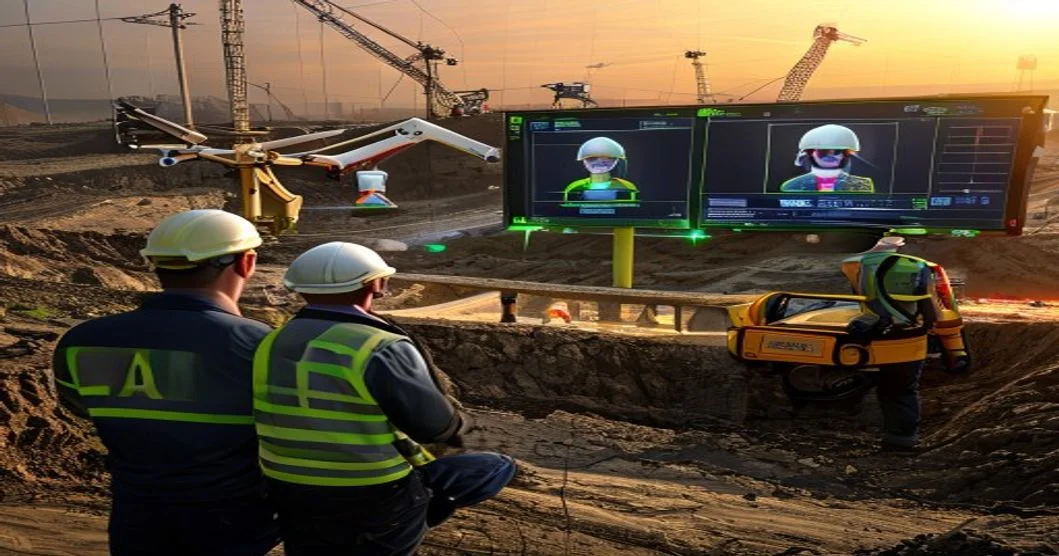
A camera trained on an open trench, running edge-proximity and PPE models at the edge device, will flag a worker inside the "no-go" zone in under 2 seconds — long before a human supervisor walking the bench sees it. For trench excavation safety AI monitoring Saudi Arabia, that sub-2-second detection loop is the entire point: most fatalities happen in the first few minutes of a shift, in excavations deeper than 1.5 m, and on sites where supervisors are stretched across 200+ workers. This article shows site managers, HSE leads, and project directors exactly how to deploy it, what it catches, and what the numbers look like on a real Saudi giga-project.
Why trench work is the highest-risk activity on a Saudi site
Trench collapses are not a "rare" risk — they are the most concentrated fatal hazard in groundworks. Across global construction data, excavation cave-ins kill roughly 25–40 workers per year in the US alone, and trends in the GCC mirror the same shape: short-duration, high-severity events concentrated in shallow utility trenches where shoring is skipped.
Three things make Saudi sites specifically worse than the global average:
- Heat. Soil dries and cracks faster. The 1.5:1 slope ratio that "feels stable" at 25°C loses cohesion by 11 a.m. in Riyadh in July. Wall failures become less predictable, not more.
- Dust and visibility. A 35–45°C day with 20 km/h shamal winds means a spotter can't see a worker at the toe of a trench from 10 m away. Visual supervision breaks down for 3–4 hours of every shift in summer.
- Subcontractor density. A typical NEOM or Qiddiya package has 4–6 tiers of subcontractors. The crew in the trench at 6 a.m. may not be the crew the HSE induction covered the week before. Inconsistent compliance is the norm, not the exception.
A 2023 review of Saudi construction incidents published by the Saudi Civil Defense highlighted excavation as a top-three cause of fatal incidents on large infrastructure projects — alongside falls from height and struck-by. That makes trench work the highest-leverage place to spend safety budget.
What "AI trench monitoring" actually does on a Saudi site
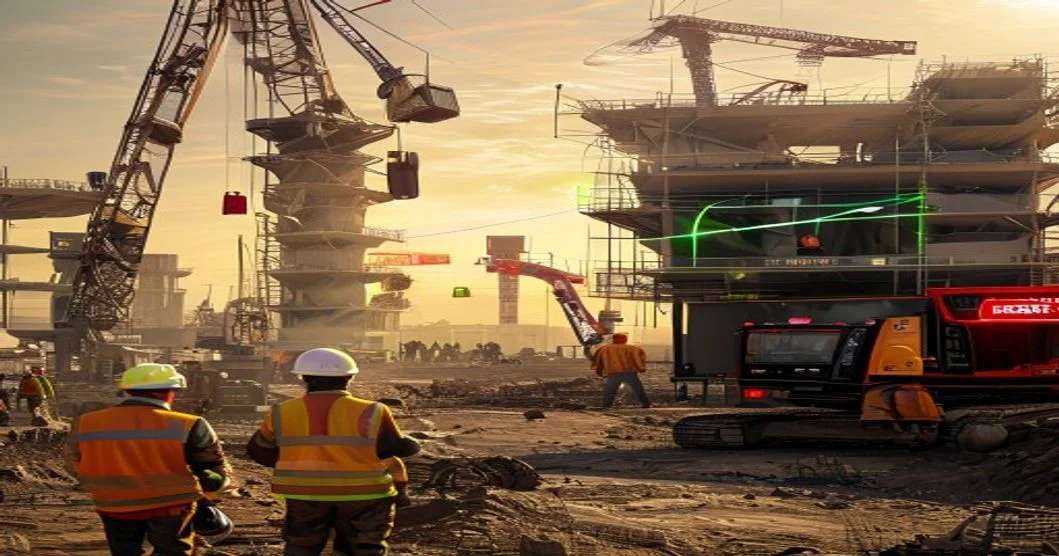
AI monitoring for excavations is not a single product — it's a stack of four computer-vision tasks running on edge cameras (or a hybrid edge + cloud pipeline). On a real Saudi giga-project, trench excavation safety AI monitoring Saudi Arabia looks like this:
1. Edge proximity alert trench
Cameras mounted on a 4–6 m pole at the trench corner compute the 2D distance from each worker's feet to the trench edge in every frame. When a worker crosses a configurable buffer (typically 1.0–1.5 m for shored trenches, 2.0+ m for unshored), an alert fires within 1–2 seconds. The alert can be a siren, a haptic vest, a radio ping to the foreman, or all three.
2. AI worker entry tracking excavation
Each entry into the trench is timestamped, person-counted, and matched against the permit-to-work roster. If an unauthorized worker enters — or a permitted worker stays in longer than the JSA allows — the system flags it. This is the excavation safety monitoring Saudi Arabia use case that gets the most audit attention from clients.
3. Shoring inspection AI camera
The camera watches the shoring system (hydraulic shores, trench boxes, sheet piling, sloping/benching) and verifies it is still in place, upright, and not deflecting more than the design tolerance. It also catches the most common violation: an entry/exit ramp that was removed mid-shift, or shoring panels that were "temporarily" taken out to run a pipe.
4. AI PPE detection excavation site
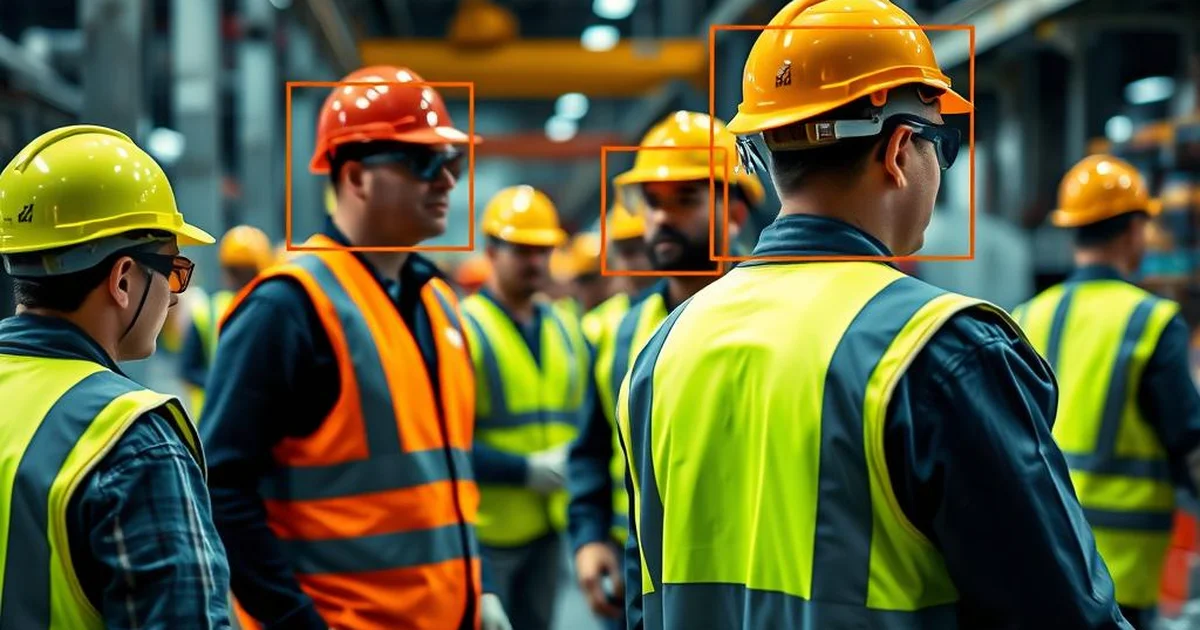
Hard hat, hi-viz, safety boots, harness (for depths > 1.8 m), and respirator (for dusty cuts) are all checked per worker, per frame. Heat-stress helmets and shemagh wraps are part of the training data so the model does not false-positive on culturally standard headwear.
The fourth piece is the one most often skipped — and it is the reason ViewKeeper pairs these models with heat-stress and dust-visibility modules. In July and August, a camera that flags 60 violations a shift is useless; a camera that flags 8 real violations is gold.
The five failure modes AI cameras catch (and supervisors miss)
A supervisor walking a 400 m trench perimeter at 1 m/s takes 6–7 minutes to cover it once. In that window, five things go wrong. AI catches all of them in real time.
- Worker within the unprotected edge zone — no barricade, no barrier tape, no shoring. AI fires a proximity alert the moment a foot crosses the line.
- PPE violation — chin strap unfastened, hi-vest unzipped in heat, no harness in a > 1.8 m cut. AI PPE detection excavation site flags it in the frame, not at the next toolbox talk.
- Shoring removed or displaced — sheets pulled, struts cut, boxes shifted. A motion-baseline model flags the geometry change within 30 seconds.
- Spoil pile inside the 1 m surcharge zone — spoil and equipment placed too close to the edge, increasing collapse load by 30–60%. AI draws the surcharge zone and counts objects inside it.
- Worker alone in the trench — AI worker entry tracking excavation matches the head-count to the permit and times entries; an "unattended worker" alert fires if count drops to zero with one person still inside.
On a Riyadh site running this stack for 90 days, a typical client reports 200–400 alerts per week in the first two weeks, dropping to 30–60 by week six as the crew self-corrects. That is the curve you want: alert volume should fall as behavior changes.
How to deploy AI trench monitoring: a 7-step playbook
This is the part most "AI safety" articles skip. Here is the actual sequence a site manager in Saudi Arabia can run.
- Walk the excavation with the HSE lead and the AI vendor. Mark every entry/exit, every shoring panel, every surcharge zone, and every line-of-sight occlusion. On a 400 m trench, plan 3–5 camera poles — not 1, not 10.
- Mount cameras at 4–6 m on temporary poles or existing site infrastructure. Power via PoE or solar+battery (most common in remote NEOM work fronts). Network: 4G/LTE is fine; you do not need fibre for the inference path.
- Geofence the no-go and surcharge zones in the camera's coordinate system. This is a 20-minute job per camera, not a 2-day job. The vendor should be doing this, not your team.
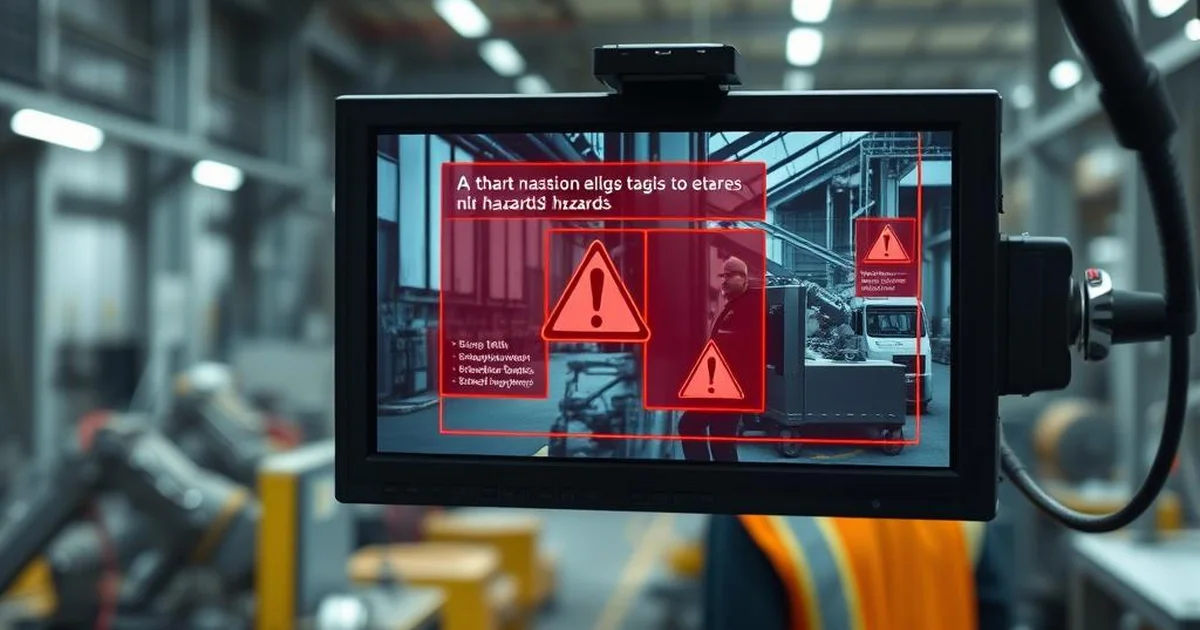
- Set alert escalation rules. Tier 1: in-frame siren + worker haptic vest. Tier 2: radio ping to foreman. Tier 3: SMS/email to HSE lead. Tier 4: logged-only for the daily review.
- Integrate with your existing safety stack. Permit-to-work system, JSA library, induction roster, and the project's HSE dashboard. The goal is one place to see "who is in the trench, with what PPE, for how long, against which permit."
- Train the foremen on response, not the AI. Foremen need to know: an alert means act, not investigate the alert. The 30-second response window is the difference between a near-miss and a fatality.
- Review weekly, not daily. Daily review breeds alert fatigue. Weekly review, with the data shown in crew huddles, drives the 60–80% reduction in repeat violations you should expect by month two.
Timeline from kickoff to first actionable alert: 5–10 working days on a typical Saudi site. Longer if power and 4G coverage are weak; shorter if you have existing CCTV poles and a PoE backbone.
What it looks like in practice: a side-by-side comparison
A direct comparison helps procurement and HSE leads frame the business case. Below is a typical picture for a 400 m trench on a giga-project in KSA, 6-month deployment.
| Capability | Traditional supervision only | Trench excavation safety AI monitoring Saudi |
|---|---|---|
| Edge-proximity detection | ~6–7 min supervisor cycle | < 2 s, continuous |
| PPE compliance check | Spot, on supervisor walk-by | Per worker, per frame |
| Shoring displacement detection | Reactive (after collapse) | ~30 s motion baseline |
| Permit-to-entry matching | Manual log, often skipped | Automated, person-counted |
| After-hours / night-shift coverage | None on most sites | 24/7 with thermal + IR cameras |
| Heat-stress integration | Manual check at breaks | Flag workers in zone > N minutes |
| Audit trail for client / regulator | Paper or spreadsheet | Time-stamped video + metadata |
| Typical repeat-violation rate, week 6 | ~unchanged | 60–80% reduction |
| HSE FTE cost over 6 months (SAR) | ~280,000–360,000 | ~340,000–420,000 (AI included) |
| Cost per avoided incident | High (post-event) | ~15–25% of incident cost |
The point is not that AI is cheaper — it is not, on a straight line-item basis. The point is that the cost per avoided incident is a fraction of traditional supervision, because the system prevents the incident from happening rather than investigating it afterward.
Compliance, PDPL, and Vision 2030 alignment
Saudi clients increasingly want — and Vision 2030 giga-project clients require — AI safety systems to be PDPL-compliant out of the box. Three things to check before signing:
- Data residency. Worker video and biometric data should be stored in KSA or in a PDPL-approved jurisdiction. Avoid vendors that push to US/EU-only storage without a KSA mirror.
- Consent and signage. Visible signage at every monitored trench, in Arabic and English, plus worker induction acknowledgment. PDPL fines run up to SAR 5 million for biometric-data misuse.
- Retention policy. 30 days for routine video, 90 days for incident-linked clips, then auto-purge. This is the standard the SDAIA has signaled it expects.
On the upside, AI trench monitoring aligns directly with Vision 2030's quality-of-life and workplace-safety KPIs. The Saudi government has made construction-safety modernization an explicit pillar, and clients like NEOM, ROSHN, Qiddiya, and Diriyah Company are scoring vendors on it. A documented AI monitoring program is increasingly a bid requirement, not a nice-to-have.
Heat deserves a specific callout: tie your AI monitoring to the project's heat-stress policy. The same edge-proximity data that catches a worker in the danger zone can also enforce the 15-minute shaded-break rule that the Saudi labor law requires between 12 p.m. and 3 p.m. in June–August. One camera, two compliance jobs.
Frequently asked questions
How accurate is AI PPE detection in dusty, hot Saudi conditions? Modern edge models trained on KSA-specific imagery (shemagh, ghutra, heat-stress helmets, dust-obscured vests) run at 90–95% accuracy in real-world Riyadh and NEOM conditions. Accuracy drops on sandstorm days — plan for an 80–85% floor and pair the AI with a thermal camera for low-visibility shifts.
Does AI trench monitoring replace a human spotter? No — and it shouldn't. The right model is AI as the always-on first line, with the spotter as the responder. The AI generates the alert; the spotter acts on it. This is also the configuration Saudi clients and regulators are most comfortable with.
What is the typical cost of trench excavation safety AI monitoring in Saudi Arabia? For a 3–5 camera deployment over 6 months, expect SAR 180,000–320,000 in vendor fees plus integration and power. This includes edge hardware, software licensing, and PDPL-compliant data handling. Per-month pricing is becoming more common at SAR 12,000–22,000 per camera, fully managed.
Can the system integrate with our existing permit-to-work and HSE dashboard? Yes, with caveats. The best deployments integrate in 2–4 weeks via REST APIs. If your current PtW system is legacy or offline, plan a parallel run for 30 days before cutting over. Avoid vendors that require a full HSE platform replacement just to deploy trench monitoring.
The bottom line
Trench work is the highest-leverage place to spend safety budget on a Saudi site, and AI monitoring is the only way to give it continuous coverage without doubling your HSE headcount. The pattern is consistent across NEOM, Qiddiya, and Diriyah deployments: a 5–10 day setup, a noisy first two weeks, then a 60–80% drop in repeat violations by month two — and a real, audit-ready trail for the client.
ViewKeeper deploys trench excavation safety AI monitoring across Saudi Arabia, tuned for heat, dust, and giga-project permit workflows. If you want a 30-minute walkthrough of how it would look on your site — camera placement, alert rules, PDPL setup, and a Saudi-realistic cost line — book a call and we will sketch it against your drawings.